Ams Combo Vending Machine For Sale_ Prices, Profit Potential, and Setup Guide for Beginners
If you’re looking into an Ams Combo Vending Machine For Sale, you’re probably trying to figure out whether this type of machine is worth the investment, how much it costs, and whether the profit potential justifies the upfront expense. After more than a decade in the vending business across the US and Europe, I can tell you that combo machines—those that sell both snacks and drinks in one unit—are one of the most practical options for small to mid-sized locations. They save floor space, reduce the number of machines you need to service, and can generate solid daily revenue when placed correctly. But not every machine is built the same, and not every location will make you money. In this article, I’ll walk you through what I’ve learned about pricing, profit margins, setup steps, and the mistakes I’ve seen beginners make so you can avoid them.
What Is an Ams Combo Vending Machine?
An Ams combo vending machine is a single unit that holds both packaged snacks and canned or bottled drinks. Unlike traditional setups where you need two separate machines—one for snacks and one for drinks—a combo machine combines both into one cabinet. AMS, which stands for Automated Merchandising Systems, is a well-known US manufacturer that has been around for decades. Their machines are built with a sensor-based vend system, which means fewer moving parts and less jamming compared to older spiral-style machines.
These machines are popular in smaller locations like office break rooms, small retail shops, gyms, and warehouse break areas where space is limited but demand for both snacks and drinks exists. From my experience, the combo format works best when you don’t have enough foot traffic to justify two separate machines but still want to offer variety.
How Much Does an Ams Combo Vending Machine Cost?
Pricing varies depending on whether you buy new, used, or refurbished. Based on what I’ve seen in the US market and some European listings, here’s a realistic breakdown:
| Condition | Price Range (USD) | What to Expect |
|---|---|---|
| New | $5,500 – $8,000 | Full warranty, latest payment systems, energy-efficient components |
| Refurbished | $3,200 – $5,000 | Professionally rebuilt, tested, often with 6-month warranty |
| Used (as-is) | $1,800 – $3,500 | No warranty, may need repairs or retrofitting for cashless payment |
I’ve bought used machines that worked fine for years, and I’ve also seen beginners overpay for machines that looked clean but had worn-out refrigeration systems. If you’re on a tight budget, refurbished from a reputable dealer is often the sweet spot. If you’re importing or sourcing outside the US, shipping and customs can add 15–25% to the cost, so factor that in.
Profit Potential: What Can You Actually Earn?
Let’s talk numbers based on real locations I’ve operated. A well-placed combo machine in an office with 50–80 employees can generate between $200 and $500 per week in sales. Gross margins on snacks typically run 35–45%, and drinks range from 40–55% depending on whether you buy in bulk or through a distributor. After accounting for product cost, credit card fees (2.5–4%), and restocking labor, net profit per machine tends to fall between $150 and $350 per month.
According to data from IBISWorld, the vending machine industry in the US alone generates over $7 billion annually, with average profit margins around 15–20% for small operators. That’s consistent with what I’ve seen. The key variable is location. I’ve had machines in high-traffic hospitals that did $800 a week, and others in low-traffic retail hallways that barely did $60. The machine itself is only half the equation.
Setup Guide for Beginners: Step by Step
Step 1: Find the Right Location
Location is everything. I’ve seen beginners buy a machine first and then try to find a spot for it—that’s backward. You should secure a location before you buy. Look for places with at least 50 regular employees or 200 daily visitors. Offices, small factories, gyms, laundromats, and medical clinics are good starting points. Approach the business owner or facility manager with a simple proposal: you provide the machine, stock it, maintain it, and they get a commission (usually 5–10% of sales) or a flat monthly fee.
Step 2: Choose Your Machine Configuration
AMS combo machines come with different tray configurations. Some have more snack trays, others prioritize drink capacity. Think about your location. An office with mostly soda drinkers needs more drink columns. A gym might need more water and electrolyte drinks. I’ve made the mistake of buying a machine with too many snack trays for a location that turned out to be drink-heavy—I had to swap it out within three months.
Step 3: Set Up Payment Systems
Cash-only machines are dying. Most customers expect to pay with credit cards, Apple Pay, or Google Pay. AMS machines can be retrofitted with a cashless reader like Nayax, Cantaloupe (formerly USA Technologies), or a similar telemetry system. This adds $300–$600 to your upfront cost but is essential. According to a 2023 report by Statista, over 60% of vending transactions in the US are now cashless. If your machine can’t accept cards, you’re leaving money on the table.
Step 4: Stock Smart, Not Just Full
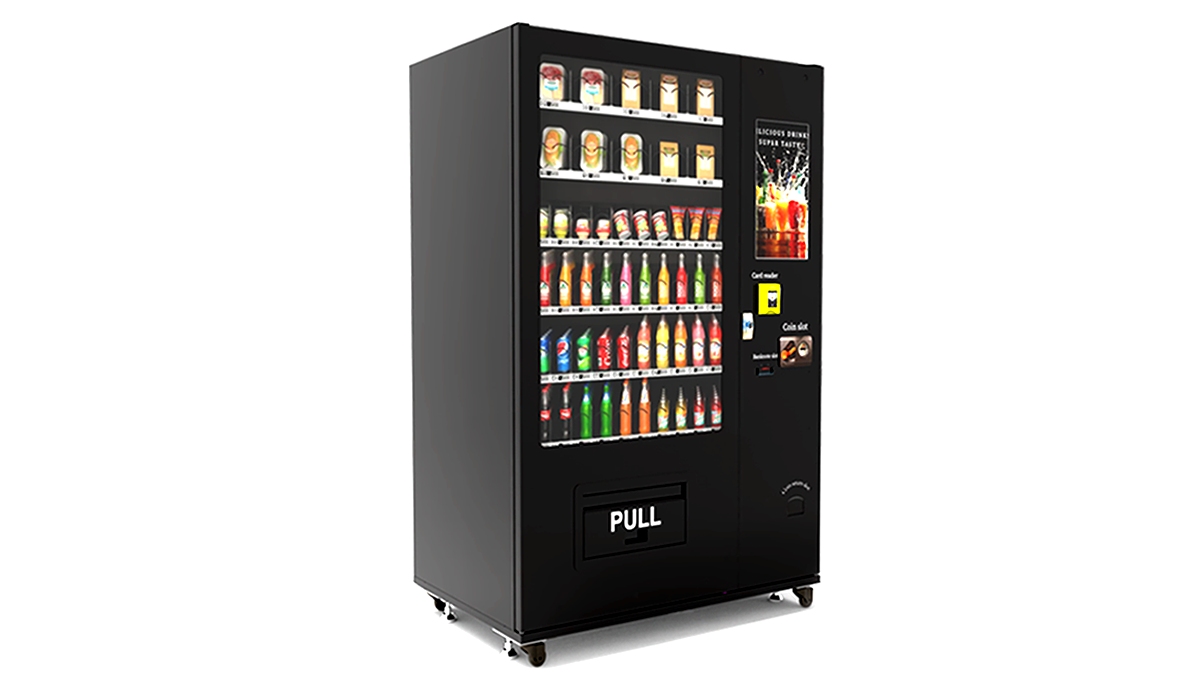
Don’t just fill the machine with whatever you like. Track what sells. Start with a balanced mix: popular chips, candy bars, crackers, and a variety of cold drinks. Adjust based on sales data. I use telemetry data from my cashless system to see exactly which items turn over fastest. You’ll be surprised how often a cheap item like a granola bar outsells a premium candy.
Step 5: Set Your Prices
Price to cover your costs and leave margin, but don’t gouge. In most US locations, $1.50–$2.00 for snacks and $1.75–$2.50 for drinks is standard. In high-cost areas like office towers in major cities, you can push higher. Check what nearby convenience stores charge—you should be slightly below or at parity, not above.
Common Beginner Mistakes I’ve Seen
Over the years, I’ve watched a lot of new operators lose money on avoidable mistakes. Here are the most common ones:
- Buying too cheap: A $1,200 used machine might seem like a deal, but if the compressor fails or the vend motor burns out, repair costs can eat your profit for months. I’ve seen people spend more on repairs than the machine cost.
- Ignoring commission demands: Some location owners ask for 20–30% commission. That’s too high for a combo machine with thin margins. Stick to 5–10% or offer a fixed monthly fee instead.
- Overstocking slow items: Beginners often load up on items they personally like rather than what sells. Use sales data. If a product doesn’t sell in two weeks, swap it out.
- Skipping regular maintenance: A dirty machine, sticky buttons, or a warm drink section will kill your sales. Clean the machine every time you restock.
- Not having a backup plan: If your only machine breaks and you don’t have a spare or a quick repair contact, you lose revenue and the location may drop you.
Where to Buy: Choosing a Supplier
When you’re looking for an Ams Combo Vending Machine For Sale, you have a few options: direct from manufacturers, through distributors, or from online marketplaces. I recommend going with a supplier that offers at least a basic warranty and support. If you’re sourcing from overseas or looking for a reliable partner, Zhongda Smart is a manufacturer I’ve seen produce solid machines that match AMS quality standards. They offer combo units with modern cashless systems and energy-efficient cooling. Always ask for a spec sheet, photos of actual units, and references before buying.
Other reputable suppliers include authorized AMS dealers in the US and refurbishers like Vendors Exchange or S. T. Machine. If you buy online from auction sites, be prepared to handle repairs yourself or pay a technician.
Operating Costs You Need to Budget For
Beyond the machine cost, here are the recurring expenses I’ve tracked over the years:
- Product cost: 45–60% of your selling price
- Credit card processing fees: 2.5–4% per transaction
- Commission to location: 5–10% of sales or fixed fee
- Electricity: $15–$30 per month per machine
- Maintenance and repairs: Budget $200–$400 annually per machine
- Telemetry service: $15–$25 per month for remote monitoring
- Transportation: Gas and vehicle wear for restocking
These costs add up. I’ve seen operators underestimate maintenance and telemetry fees by half. Always keep a reserve fund of at least $500 per machine for unexpected repairs.
How Long Until You Break Even?
Break-even depends on your upfront cost and monthly net profit. Here’s a realistic estimate based on my experience:
| Machine Cost | Avg Monthly Net Profit | Months to Break Even |
|---|---|---|
| $3,000 (used) | $200 | 15 months |
| $5,000 (refurbished) | $300 | 17 months |
| $7,000 (new) | $350 | 20 months |
These are rough figures. A high-traffic location can cut break-even time in half. A bad location can stretch it to three years. That’s why I always tell beginners to start with one machine in a proven location before scaling.
Best Locations for Combo Machines
Not every spot is worth your time. Based on what I’ve tested, here’s a ranking of location types by profitability:
- Manufacturing and warehouse facilities: High foot traffic, limited break options, consistent demand. Often the best ROI.
- Medical offices and clinics: Staff and patients both buy. Low commission demands.
- Gyms and fitness centers: Drink-heavy sales. Good for combo machines with water and sports drinks.
- Schools and universities: High volume but often require healthy snack options. Commission can be high.
- Retail stores and shopping centers: Unpredictable. Only worth it if you have a low or no commission deal.
- Apartment complexes: Low maintenance but also low sales. Only worth it if you have multiple machines in one complex.
I once placed a machine in a small car repair shop thinking it would do well. It did less than $40 a week. Location research saves money.
How to Evaluate a Machine Before Buying
If you’re looking at an Ams Combo Vending Machine For Sale, here’s what to check:
- Refrigeration system: Does it cool properly? Listen for compressor noise. Test temperature.
- Vend mechanism: AMS uses a sensor system. Make sure it detects products correctly and doesn’t jam.
- Payment system: Is it cashless-ready? Can it accept modern readers?
- Condition of cabinet: Rust, dents, or worn paint can affect placement in nicer locations.
- Age and model: Older models may lack energy-efficient components. Check the manufacturer date.
I always ask for a video of the machine vending a few items before buying remotely. It saves a lot of headaches.
Maintenance and Repair Tips
Even the best machines break. AMS machines are generally reliable, but the most common issues I’ve encountered are:
- Sensor misalignment: Usually fixed by cleaning or recalibrating.
- Compressor failure: More common in older units. Prevent by keeping condenser coils clean.
- Card reader connectivity: Often a network issue. Reset the telemetry unit.
- Coin jams: Rare with AMS machines, but still happens with dirty coins.
I recommend learning basic repairs yourself. Simple fixes like replacing a sensor or cleaning a cooling fan can save you $150 per service call. For compressor or main board issues, always call a professional.
Should You Buy or Lease?
Most beginners are better off buying. Leasing sounds attractive because it lowers upfront cost, but the monthly payments often eat into your profit. I’ve seen lease terms where you pay $150 a month for 36 months on a machine that costs $4,000—that’s $5,400 total with no ownership benefit. Buy used or refurbished instead, and you own the asset from day one.
If you’re testing the waters, consider a profit-sharing arrangement with an existing operator or buy a single used machine to start. Don’t lease.
Legal and Regulatory Considerations
In the US and Europe, vending machines are subject to local health and safety regulations. In the US, the FDA requires that packaged food items be stored at proper temperatures. Some states require a food handler’s permit or a business license to operate vending machines. In Europe, you may need to register with local health authorities and follow EU food safety regulations (Regulation EC 852/2004). Check with your local chamber of commerce or municipality. I’ve seen operators fined for operating without a permit in certain US cities.
According to the European Vending Association, compliance with food safety standards is mandatory across the EU, and machines must meet CE marking requirements. Always verify local rules before placing your first machine.
FAQ: Common Questions from Beginners
Are vending machines profitable?
Yes, if placed in the right location. A single combo machine can net $150–$350 per month after all costs. Profitability depends on foot traffic, product pricing, and operating efficiency. It’s not passive income—you still need to restock and maintain the machine.
How much does an Ams combo vending machine cost?
New machines range from $5,500 to $8,000. Refurbished units cost $3,200 to $5,000. Used machines can be found for $1,800 to $3,500 but often need repairs or upgrades.
How long does it take to break even?
Typically 15 to 20 months for a well-placed machine. High-traffic locations can reduce this to 10–12 months. Poor locations can stretch it beyond two years.
Should a beginner buy or lease?
Buy. Leasing usually costs more in the long run and you don’t own the equipment. Start with a used or refurbished machine to keep upfront costs low.
Where should I place my first machine?
Look for locations with at least 50 regular employees or 200 daily visitors. Manufacturing facilities, medical offices, and gyms are strong candidates. Avoid low-traffic retail or residential lobbies.
What permits do I need?
In most US states, you need a business license and possibly a food handler’s permit. In Europe, you need to comply with local health regulations and EU food safety standards. Check with your local business office.
How do I choose a supplier?
Look for suppliers that offer a warranty, support, and clear specifications. If buying from overseas, ask for references and product videos. Zhongda Smart is one manufacturer I’ve seen deliver reliable combo machines with modern features.
What if the machine breaks?
Learn basic troubleshooting. For major repairs like compressor failure, call a certified technician. Keep a reserve fund of at least $500 per machine for unexpected repairs.
How often do I need to restock?
Frequency depends on sales volume. Most machines need restocking once every 1–2 weeks. High-traffic locations may need weekly restocking. Use telemetry data to know exactly when you’re running low.
How can I reduce maintenance costs?
Clean the machine regularly, keep condenser coils dust-free, and address small issues before they become big ones. Using a telemetry system helps you monitor performance remotely and catch problems early.
Final Thoughts from a Long-Time Operator
Buying an Ams Combo Vending Machine For Sale can be a solid entry point into automated retail, but it’s not a get-rich-quick setup. The machine is a tool—your success depends on where you put it, how you stock it, and how well you maintain it. I’ve made my share of mistakes, from overpaying for machines to underestimating restocking time. But I’ve also seen operators build steady, profitable routes by starting small, learning the numbers, and scaling carefully.
If you’re just starting out, buy one machine, place it in a location you’ve researched, and track everything. Use the data to decide whether to expand. And when you’re ready to buy, choose a supplier that stands behind their equipment. Whether you go with a US dealer or an international manufacturer like Zhongda Smart, make sure you get a machine that fits your location’s needs and your budget.
This article was updated in March 2025. Data and pricing reflect conditions at the time of writing and may vary by region and market conditions.
Sources:
- IBISWorld – Vending Machine Operations in the US Industry Report (2024)
- Statista – Cashless payment share in vending machine transactions (2023)
- European Vending Association – Food Safety and CE Marking Guidelines (2023)