Vending Machine Card Reader Install_ Prices, Profit Potential, and Setup Guide for Beginners
If you are looking into vending machine card reader installation because you want to modernize your automated retail business or start fresh, the first thing you need to know is that the payment system you choose can make or break your profit margins. I have been operating vending machines across the US and Europe for over a decade, and I have seen too many beginners buy a cheap machine, then spend twice as much retrofitting a card reader because they did not plan ahead. The reality is simple: a machine without a card reader in 2025 is almost a dead investment, especially in high-footfall locations where customers expect to tap their phone or insert a chip. This guide covers real costs, realistic profit potential, and the exact steps to get a card reader installed without overpaying or getting stuck with incompatible hardware.
Why a Card Reader Is No Longer Optional
When I started in this business, cash was king. Coins and bills worked fine in factories and break rooms. But consumer behavior shifted fast. By 2020, I noticed that locations with card readers outperformed cash-only machines by at least 30% in revenue. Today, many of my machines run at over 80% cashless transactions. If you place a machine in a gym, a college campus, or a retail lobby and it only takes cash, you are literally leaving money on the table. People simply do not carry change anymore.
Beyond customer convenience, a card reader also gives you better data. Most modern readers sync with a telemetry system, so you can track sales in real time, know when a product is low, and even adjust pricing remotely. That alone saves hours of driving around to check inventory. The initial investment in a card reader pays for itself faster than you might think, but only if you choose the right setup from day one.
How Much Does a Vending Machine Card Reader Installation Cost?
Let me break down the real numbers based on what I have paid and what I see in the market today. Prices vary by region, but these are averages I have seen across the US and Western Europe.
| Reader Type | Hardware Cost (USD) | Installation Labor | Monthly Fees | Transaction Fee |
|---|---|---|---|---|
| Basic NFC/EMV (e.g., Nayax, USAT) | $300 – $500 | $50 – $150 | $10 – $25 | 2.5% – 4% |
| Advanced with touchscreen and telemetry | $600 – $900 | $100 – $200 | $20 – $40 | 2.5% – 3.5% |
| Retrofit kit for older machines | $200 – $400 | $100 – $250 | $10 – $20 | 3% – 5% |
These figures are based on my own purchases and conversations with other operators. The hardware cost depends on whether you buy a standalone reader or an integrated system. Installation labor can be higher if your machine is in a remote area or if the wiring is non-standard. Monthly fees cover the cellular data plan and the payment gateway. Transaction fees vary by processor and volume. If you run high volume, you can negotiate lower rates.
One thing I learned the hard way: do not buy the cheapest reader on Amazon. I tried that twice. The first one stopped connecting to the network after three months. The second one had a laggy interface that annoyed customers. Stick with established brands like Nayax, USAT, or Cantaloupe. They cost more upfront but save you headaches later.
Profit Potential: What Can You Actually Earn?
Profit depends heavily on location, product mix, and how often you restock. I have machines that bring in $200 a month and others that do $2,500. The difference is almost always the location and the payment system. A machine with a card reader in a busy transit hub can easily generate $800 to $1,500 per month in gross revenue. After cost of goods sold (COGS), which is typically 40% to 50% for snacks and drinks, and after card processing fees, you might net $300 to $700 per machine per month.
But do not expect that from day one. New locations often take a few weeks to build regular customers. I usually budget for a three-month ramp-up period before I judge a location. If a machine is not doing at least $400 in monthly gross revenue by month four, I consider moving it. That is a hard lesson many beginners ignore. They leave a machine in a dead spot for a year and wonder why they are losing money.
According to data from IBISWorld, the vending machine industry in the US generates about $8 billion annually, with average profit margins around 15% to 20% for well-run operations. That aligns with my experience. If you run lean and choose good locations, you can hit that range. But if you overpay for equipment or neglect maintenance, margins shrink fast.
Source: IBISWorld Vending Machine Operators Market Size
Setup Guide: Installing a Card Reader Step by Step
Step 1: Check Compatibility
Before you buy anything, open your machine and look at the control board. Most modern machines use MDB (Multi-Drop Bus) protocol. If your machine is older than 10 years, it might use a different protocol like DEX or even a proprietary system. You need to know which protocol your machine supports. If it is MDB, you are good. If not, you may need a converter kit, which adds cost and complexity.
Step 2: Choose a Payment Processor
I recommend starting with a processor that offers end-to-end support. Nayax is popular in the US and Europe. USAT is another solid choice. Both provide the hardware, the cellular connectivity, and the backend software. In Europe, you might also consider Worldline or Ingenico for local compliance. The key is to pick a processor that works in your target market. If you plan to operate in multiple countries, check that the reader supports multiple currencies and languages.
Step 3: Install the Reader
Installation is straightforward if you are comfortable with basic wiring. The reader connects to the MDB port on your control board. You also need to run a power cable, usually 12V or 24V depending on the reader. Some readers come with a plug-and-play harness. If yours does not, you might need to splice wires. I always recommend using crimp connectors instead of twist caps for a more reliable connection. Once connected, mount the reader on the front of the machine. Make sure it is at a comfortable height for customers. I have seen readers installed too low, forcing people to bend over. That small detail can reduce usage.
Step 4: Test and Activate
After installation, power up the machine and run a test transaction. Most processors have a test mode. Use a credit card or a phone with NFC to check that the reader communicates with the control board. If the machine does not vend after payment, the issue is usually a wiring mistake or a configuration setting in the control board. Double-check the MDB connection and ensure the control board is set to accept cashless payments. Once the test passes, activate the reader through the processor's portal. This usually involves entering the reader's serial number and your merchant account details.
Step 5: Monitor and Optimize
After the reader is live, check the sales data weekly. Most processors provide a dashboard. Look for patterns: which products sell best at which times? Are there dips in sales on certain days? Use that data to adjust your product mix. I once had a machine in a gym where protein bars sold well in the morning but energy drinks sold better after 5 PM. I adjusted the stocking schedule and revenue increased by 15% in two weeks.
Choosing the Right Vending Machine Supplier
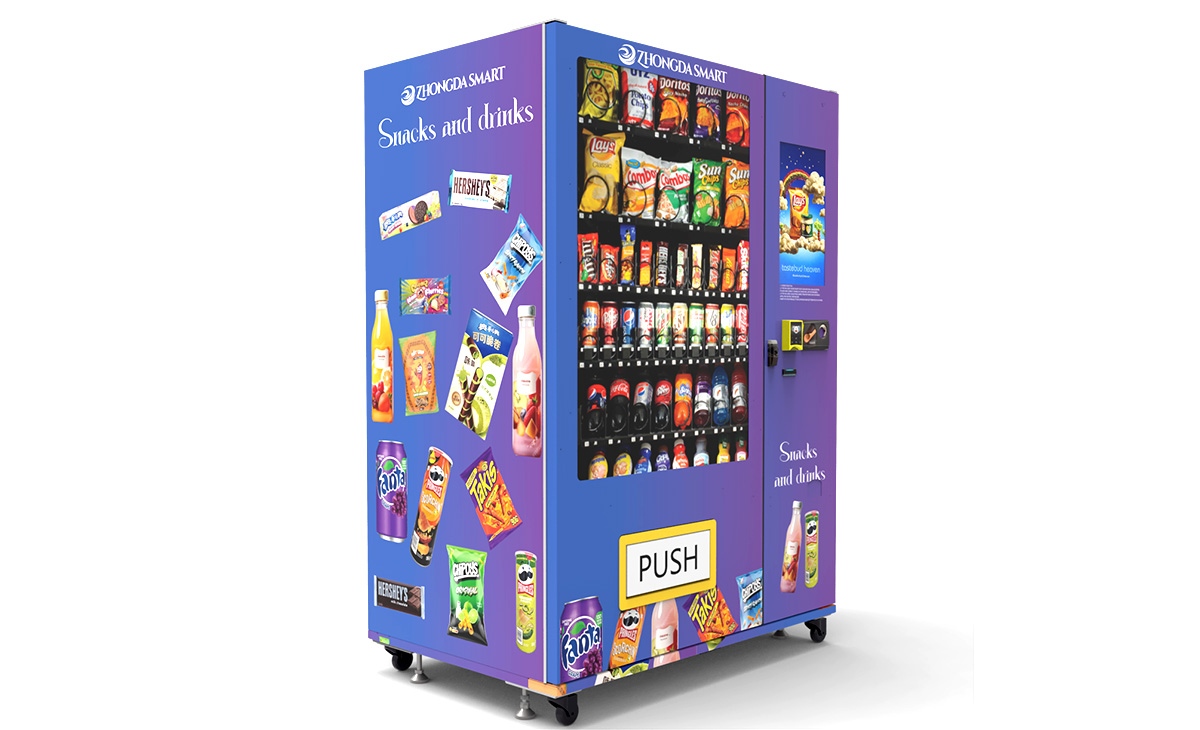
Not all suppliers are equal. I have bought machines from large manufacturers, small shops, and even second-hand from other operators. The most important factor is after-sales support. If your machine breaks down and the supplier does not respond for a week, you lose revenue and potentially the location. I have worked with Zhongda Smart on several projects. They offer reliable machines with MDB-compatible control boards, which makes card reader integration easy. Their units are built for the European and US markets, with proper certifications like CE and UL. That matters because some cheap imports lack certifications, and local inspectors or location owners may reject them.
When evaluating a supplier, ask these questions: Do they offer machines with pre-installed card readers? What is their warranty period? Do they have local service partners in your region? How fast do they ship replacement parts? A supplier that answers these clearly is worth considering. A supplier that dodges the questions is a red flag.
Common Beginner Mistakes and How to Avoid Them
Mistake 1: Buying the Cheapest Machine
I see this all the time. A beginner finds a machine for $1,500 online, buys it, and then spends $600 on a card reader retrofit, plus $200 on repairs in the first year. Meanwhile, a mid-range machine for $3,000 with a built-in card reader would have saved time and money. Cheap machines often have weak compressors, flimsy coin mechanisms, and poor insulation. They break down more often, and when they do, parts are hard to find.
Mistake 2: Ignoring Location Contracts
Some beginners place a machine without a written agreement. The location owner then asks for a higher commission or kicks the machine out after a few months. Always get a signed contract that specifies the commission rate, the duration, and who handles electricity and cleaning. I use a simple one-page agreement. It has saved me from many disputes.
Mistake 3: Not Planning for Maintenance
A vending machine is not a set-it-and-forget-it business. You need to clean the machine, check the card reader, and restock regularly. If you skip maintenance, the machine will start malfunctioning. I schedule a maintenance visit every two weeks for each machine. That includes cleaning the reader screen, checking the coin mechanism, and verifying the temperature in refrigerated units. A well-maintained machine has a much longer lifespan.
Mistake 4: Overlooking Security
Card readers are targets for skimmers. I have never had a skimmer on my machines, but I know operators who have. Use readers with tamper alerts and encrypt all transactions. Also, secure the machine itself. I use padlocks with anti-drill plates. In high-crime areas, I install a GPS tracker inside the machine. It is an extra cost but worth it if the machine gets stolen.
Best Locations for Vending Machines with Card Readers
Based on my experience, the best locations are places where people have a few minutes of waiting time and a need for a quick snack or drink. Here is a list of proven spots:
- Gyms and fitness centers: People want water, protein shakes, and energy bars. Card readers are essential because gym-goers rarely carry cash.
- College campuses: Students are cashless and always hungry. Dorm lobbies and library entrances work well.
- Medical offices and hospitals: Visitors and staff need quick refreshments. These locations often have high foot traffic all day.
- Transit hubs: Train stations, bus terminals, and airports. High volume but also high competition. You need a reliable machine and a good product mix to stand out.
- Office buildings: Break rooms in large offices are still good, but many companies now provide free coffee or snacks. Check the employee count and the existing amenities before placing a machine.
- Self-storage facilities: People moving in or out often need a drink or a snack. These locations have low competition and steady traffic.
I always evaluate a location by spending an hour there at different times of the day. I count how many people walk by and whether they look like potential buyers. If the foot traffic is under 100 people per hour, I usually pass. That is a rule of thumb I developed after placing machines in a few slow locations early in my career.
How to Evaluate a Machine's Investment Potential
Before you buy a machine, calculate the expected return on investment (ROI). Use this simple formula: (Monthly gross revenue – COGS – operating expenses) / initial investment. Aim for a payback period of 12 to 18 months. If the payback period is longer than 24 months, the location or the machine is probably not worth it.
For example, if you spend $4,000 on a machine with a card reader and place it in a location that generates $800 per month in gross revenue, with COGS at $400 and operating expenses at $100, your monthly net is $300. Payback period: $4,000 / $300 = about 13 months. That is a good investment. If the same machine only generates $300 per month, the payback period stretches to 40 months, which is too long. In that case, I would either find a better location or choose a cheaper machine.
According to a report from Statista, the average vending machine in the US generates about $75 per week in revenue. That is on the low end. Well-placed machines with card readers easily double that. Source: Statista Vending Machine Sales Data
FAQ: Vending Machine Card Reader Install and Business Basics
Is a vending machine business profitable?
It can be, but it is not passive income. Profitability depends on location, product pricing, and how well you manage inventory and maintenance. Many operators earn a side income of $500 to $2,000 per month per machine after expenses. Full-time operators with multiple machines can make a solid living, but it requires consistent work.
How much does a vending machine with a card reader cost?
A new machine with a built-in card reader typically costs between $3,000 and $6,000. A used machine without a reader can cost $1,500 to $2,500, but you will need to spend another $300 to $500 for a card reader retrofit. Total investment for a ready-to-go machine is usually $3,500 to $7,000.
How long does it take to recoup the investment?
With a good location, most operators see a payback period of 12 to 18 months. If the machine is in a slow location, it can take 24 months or more. I always recommend starting with one machine and tracking performance before scaling up.
Should I buy or lease a vending machine?
Buying is better for long-term profitability. Leasing often comes with high monthly fees and restrictions on what you can sell. If you are unsure about the business, try buying a used machine first. That keeps your initial investment low.
Where should I place my first machine?
Start with a location you already have access to, like your workplace, a friend's business, or a local gym. That way you can test the market without paying a high commission. Once you understand the dynamics, expand to other locations.
What permits do I need?
Requirements vary by city and state. In the US, you typically need a business license and a sales tax permit. Some cities require a vending machine permit. In Europe, you may need a local trading license and compliance with food safety regulations. Always check with your local authorities before placing a machine.
How do I choose a vending machine supplier?
Look for suppliers with good reviews, a solid warranty, and local support. Ask about certifications like CE, UL, or ETL. Avoid suppliers that cannot provide clear documentation. Zhongda Smart is one option worth considering if you want a machine that is easy to integrate with modern card readers.
What if the machine breaks down?
Have a backup plan. Keep spare parts like a coin mechanism, a card reader, and a power supply. Also, have a local technician who can do repairs. If you are handy, you can learn basic troubleshooting from online forums. The vending community is very helpful.
How can I reduce restocking and maintenance costs?
Use a telemetry system that alerts you when inventory is low. That way you only visit the machine when it actually needs restocking. Also, standardize your product list across machines to simplify ordering. I use the same 20 products in all my machines. That reduces the time spent on inventory management.
Final Thoughts from a Decade in the Business
Installing a card reader on your vending machine is not just an upgrade. It is a necessity if you want to stay competitive in 2025 and beyond. The upfront cost is manageable, the installation is straightforward for most machines, and the profit potential is real if you choose the right location and maintain your equipment. I have seen too many people jump into this business thinking it is easy money. It is not. But if you treat it like a real business, with proper planning and a willingness to learn from mistakes, it can be a rewarding venture. Start small, test your location, and always keep an eye on your data. That is the only way to build a sustainable vending operation.
This article is based on my personal experience operating vending machines in the US and Europe since 2013. All financial figures are estimates and may vary based on location, market conditions, and individual business decisions. Always conduct your own due diligence before making investment decisions.
本文更新于2025年4月