Is Vending Machine A Good Business Business Guide_ How It Works, Profit & Maintenance Explained
If you’ve been looking for a side business that doesn’t chain you to a desk or require constant customer interaction, you’ve probably asked yourself: is vending machine a good business? After spending over a decade running vending routes across the United States and parts of Europe, I can tell you the short answer is yes—but only if you treat it like a real business, not a passive income fantasy. The difference between a profitable machine and a money pit comes down to three things: location, product selection, and how disciplined you are about maintenance. In this guide, I’ll walk you through how the business actually works, what it costs to get started, what you can realistically expect to earn, and the hard lessons I’ve learned from machines that failed and machines that still print money five years later.
How a Vending Machine Business Actually Works
A vending machine business is straightforward in concept: you buy or lease a machine, stock it with products, place it in a high-traffic location, and collect the cash. But the operational reality is more nuanced. You’re essentially running a tiny retail store that operates 24/7 without a salesperson. That means you’re responsible for inventory management, cash collection, machine repairs, and customer satisfaction—all from a distance.
Most operators I know run between 10 and 50 machines. Any fewer than 10 and the route isn’t worth the gas. Any more than 50 and you start needing part-time help. The sweet spot for a solo operator is around 20 to 30 machines, depending on how spread out they are. In dense urban areas like Paris or London, you can service 10 machines in a single day. In rural America, you might only hit five.
The business model itself is simple: you earn the margin between what you pay for products and what customers pay at the machine. Typical gross margins range from 40% to 60%, with snacks on the higher end and drinks on the lower end. But margin means nothing if the machine doesn’t sell. That’s why location is everything.
Profitability: What You Can Really Expect to Earn
Let’s talk numbers. Based on my own routes and data shared by operators in the European Vending Association, a well-placed machine in an office building or a transit hub can generate between €400 and €1,200 per month in revenue. A mediocre location—say, a small warehouse with low foot traffic—might bring in €150 to €250 per month. According to the European Vending Association, the average revenue per machine across Europe is roughly €300 to €500 per month. That aligns with my experience in the U.S. as well.
From that revenue, you subtract product cost (typically 40% to 50% of sales), location commission (anywhere from 5% to 20%), and operating costs like electricity, machine repair, and transportation. If you’re paying a 10% commission and your product cost is 45%, you’re left with 45% gross profit. On a machine doing €500 per month, that’s €225. After electricity (€20) and a monthly maintenance reserve (€30), you’re netting around €175 per machine per month.
Doesn’t sound like a fortune, right? The key is scale. With 30 machines netting €175 each, you’re looking at €5,250 per month. That’s real income. But you also need to factor in machine depreciation, theft, and the occasional machine that goes down for a week. In practice, most operators I know net between €100 and €200 per machine per month after all expenses.
Initial Investment: How Much Does a Vending Machine Cost?
This is the first question most people ask, and the answer varies widely. A brand new, basic snack machine from a reputable manufacturer like Zhongda Smart runs between €2,500 and €4,000. A combo machine that sells both snacks and drinks is more in the €4,000 to €6,000 range. High-end machines with touchscreens, cashless payment systems, and telemetry data can cost €7,000 to €12,000.
Used machines are cheaper—anywhere from €800 to €2,500—but they come with risks. I’ve bought used machines that needed a new compressor within six months, costing €600 to repair. Unless you know how to diagnose refrigeration issues, I recommend buying new or refurbished from a supplier that offers a warranty. Zhongda Smart, for example, provides a two-year warranty on their machines, which gives you time to build cash flow before you have to worry about major repairs.
Beyond the machine itself, you’ll need startup inventory (€500 to €1,000 per machine), a payment system upgrade if you want card and mobile payments (€200 to €500), and a small cash reserve for unexpected repairs. All in, expect to invest between €4,000 and €9,000 per machine to get it fully operational.
Location Selection: The Difference Between Profit and Loss
I’ve seen operators fail not because they picked bad products, but because they picked bad locations. A machine placed in a quiet office with 30 employees will never make money, no matter how good your pricing is. You need foot traffic. Specifically, you need a location where people are captive—they can’t easily walk to a store or a café.
My best-performing locations include:
- Manufacturing facilities (500+ employees, no on-site cafeteria)
- Transit stations (train, metro, bus terminals)
- Hospitals and medical centers
- College campuses and dormitories
- Large office buildings with limited break options
My worst-performing locations include:
- Small retail shops (employees already have access to snacks)
- Gyms (people bring their own water and protein bars)
- Apartment lobbies (low frequency, high theft risk)
- Schools without active student engagement
When evaluating a location, I always ask three questions: How many people pass this machine per day? How many of them are likely to buy? And what else is within a five-minute walk that competes with me? If the answers aren’t clear, I walk away.
Maintenance and Machine Repair: The Hidden Work
Most people underestimate how much time and money goes into vending machine repair and general upkeep. A machine is essentially a refrigerator with a computer attached. Things break. Coins jam. card readers fail. Compressors stop cooling. Shelves get stuck. And when a machine goes down, you lose sales and potentially the location.
In my first year, I lost a prime location because the machine was out of service for five days waiting for a part. The facility manager pulled the machine and replaced it with a competitor’s unit. That was a painful lesson. Now I keep a spare parts kit in my vehicle: coin mech, card reader, power supply, and basic tools. I also have a relationship with a local technician who can do emergency self-service kiosk repairs within 24 hours.
Routine maintenance includes cleaning the machine, checking temperatures, rotating stock, and testing payment systems. I budget €30 per machine per month for maintenance and repairs. Some months I spend nothing. Other months I spend €200. Over the course of a year, it averages out.
One thing I recommend to every new operator: buy machines with telemetry. Telemetry lets you see sales data, inventory levels, and error codes remotely. It saves hours of driving to check a machine that’s fine. Zhongda Smart machines come with basic telemetry included, which is a feature I consider essential for any modern vending operation.
Choosing the Right Equipment: Snack, Drink, or Combo?
The type of machine you choose depends entirely on the location. A snack-only machine works well in offices where people want chips, candy, and protein bars. A drink machine works in hot environments like warehouses or gyms. Combo machines are versatile but have less capacity for each category.
Here’s a quick comparison based on my experience:
| Machine Type | Cost (New) | Typical Monthly Revenue | Best Location | Maintenance Complexity |
|---|---|---|---|---|
| Snack Only | €2,500 – €4,000 | €300 – €700 | Offices, schools | Low |
| Drink Only | €3,000 – €5,000 | €400 – €900 | Warehouses, transit | Medium (refrigeration) |
| Combo (Snack + Drink) | €4,000 – €6,500 | €500 – €1,200 | Hospitals, factories | Medium-High |
| High-End Touchscreen | €7,000 – €12,000 | €700 – €1,500 | Premium offices, hotels | High (electronics) |
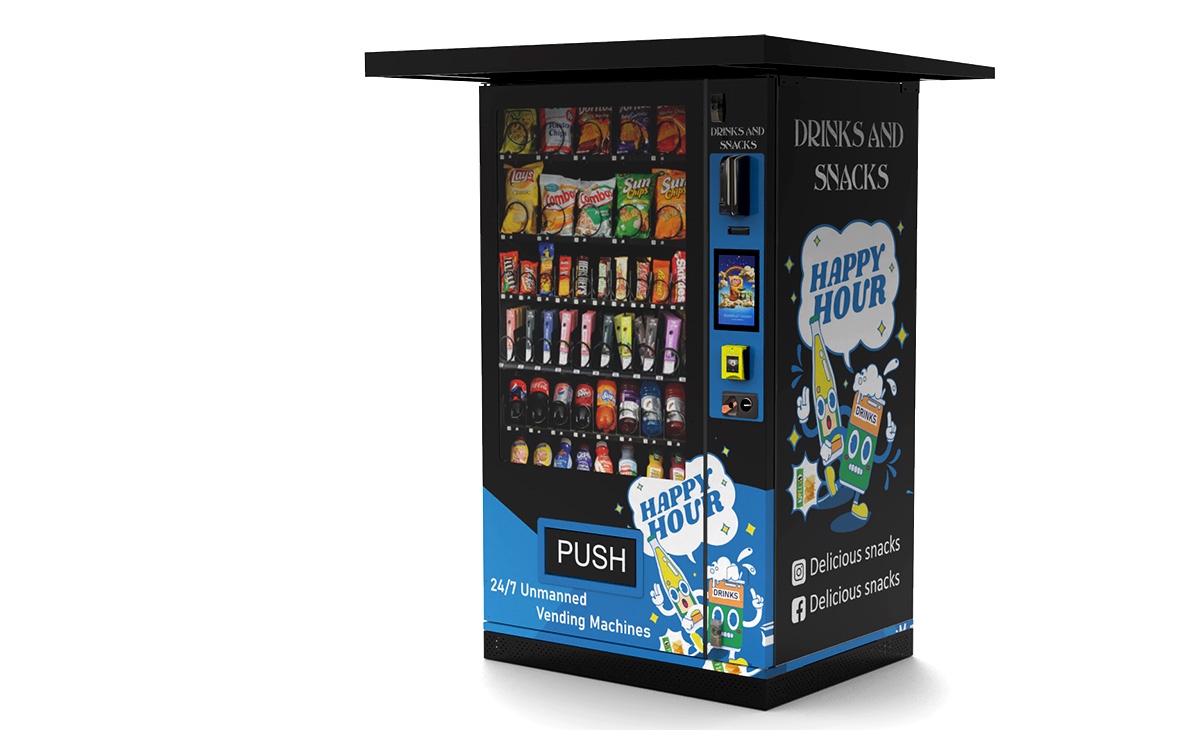
I typically start new operators with a combo machine. It gives you the most flexibility to test what sells in a location without committing to a single product category. Once you have data, you can optimize.
Payment Systems: Cashless Is No Longer Optional
If you’re operating in Europe or North America in 2025, cashless payment is a requirement. According to Statista, over 60% of vending machine purchases in Europe are made with cards or mobile wallets. In the U.S., that number is even higher. If your machine only takes coins and bills, you’re leaving 60% of potential revenue on the table.
Modern payment systems accept contactless credit cards, Apple Pay, Google Pay, and sometimes even local transit cards. The upfront cost is €200 to €500 per machine, but the increase in sales usually pays for itself within three months. I’ve seen machines with cashless systems outsell cash-only machines by 40% in the same building.
One tip: make sure your payment system works offline. Many machines are in basements or areas with poor cellular reception. If the card reader can’t process transactions when the network is down, you lose sales. Zhongda Smart offers offline-capable payment modules, which is a feature I consider critical.
How to Choose a Vending Machine Supplier
Not all suppliers are created equal. I’ve bought machines from five different manufacturers over the years, and the quality difference is dramatic. Here’s what I look for:
- Warranty: At least two years on refrigeration and electronics. Avoid suppliers that offer only 90-day warranties.
- Telemetry: Built-in remote monitoring saves you time and money. Don’t buy a machine without it.
- Spare parts availability: Can you get a replacement coin mech or card reader within 48 hours? If not, keep looking.
- European certification: For EU operators, make sure the machine has CE marking. For the UK, look for UKCA.
- Customer support: Do they answer the phone? I test this before ordering by calling their support line with a technical question.
I’ve worked with Zhongda Smart on several deployments, and they meet all these criteria. Their machines are built for the European market, with proper certifications and reliable after-sales support. That doesn’t mean they’re the only option, but they’re a solid choice for operators who want a machine that works out of the box.
Common Mistakes New Operators Make
I’ve made most of these mistakes myself, so I can tell you what to avoid:
1. Buying a machine before securing a location. I’ve seen people buy a machine, then spend months looking for a place to put it. Always secure the location first, or at least have a verbal agreement.
2. Ignoring commission demands. Some location owners ask for 20% or more. In high-traffic locations, that might be worth it. But in average locations, a 10% commission is standard. Don’t give away your margin.
3. Overstocking with trendy products. Just because you like a product doesn’t mean it will sell. Stock based on sales data, not personal preference. I learned this the hard way with a line of organic snacks that sat on shelves for months.
4. Neglecting machine repair. A broken machine is a dead asset. If you can’t fix it yourself, have a technician on call. Every day the machine is down, you’re losing money and risking the location.
5. Not tracking sales data. If you don’t know what’s selling, you can’t optimize. Telemetry solves this. Use it.
Location Contracts and Legal Considerations
Before placing a machine, get a written agreement with the property owner. The contract should cover:
- Commission percentage (typically 5% to 15%)
- Duration of the agreement (one to three years is standard)
- Access hours for restocking and maintenance
- Who pays for electricity (usually the location owner, but confirm)
- Termination clauses (30 to 60 days notice)
In some European countries, you may also need a business license or a vending machine permit. In France, for example, a distributeur automatique operator must register with the Chambre de Commerce and comply with food safety regulations. Check with your local Service-Public.fr for specific requirements.
Self-Service Kiosks and Automated Retail Trends
The vending industry is evolving. Self-service kiosks that sell hot food, fresh sandwiches, and even electronics are becoming common in high-traffic areas. These machines cost more (€10,000 to €20,000) but can generate significantly higher revenue. I’ve seen fresh food kiosks in Paris train stations doing over €3,000 per month.
Automated retail is not a replacement for traditional vending, but it’s an expansion opportunity. If you have a location with high foot traffic and a demand for fresh food, a self-service kiosk might be worth the investment. Just be prepared for higher maintenance costs and stricter food safety regulations.
For most operators, traditional snack and drink machines are the safest entry point. Once you have a few profitable routes, you can experiment with automated retail.
How to Evaluate a Machine’s Worth
Before buying a machine, calculate the potential return. Here’s my simple formula:
- Estimate monthly revenue based on foot traffic (conservatively)
- Subtract product cost (45%)
- Subtract commission (10%)
- Subtract operating costs (€50 per month for electricity and maintenance)
- Divide the machine cost by the net monthly profit to get months to payback
If the payback period is longer than 18 months, I pass. A good machine should pay for itself within 12 to 18 months in a decent location. If it takes longer than 24 months, the risk is too high.
FAQ: Vending Machine Business Questions
Is vending machine a good business for beginners?
Yes, but only if you treat it seriously. It’s not passive income. You need to manage inventory, handle machine repair, and maintain relationships with location owners. Start with one or two machines before scaling.
How much does a vending machine cost?
A new machine from a reliable manufacturer like Zhongda Smart costs between €2,500 and €6,000. Used machines range from €800 to €2,500 but may require repairs.
How long does it take to recoup the investment?
In a good location, 12 to 18 months. In a mediocre location, 24 to 36 months. Always calculate payback before buying.
Should I buy or lease a vending machine?
Buying is better long-term. Leasing often comes with high monthly payments and restrictions. If you’re testing the market, consider a used machine first.
Where should I place a vending machine?
Look for locations with high foot traffic and limited alternatives: factories, hospitals, transit stations, office buildings, and college campuses.
What permits do I need?
Requirements vary by country. In France, register with the Chambre de Commerce and comply with hygiene regulations. In the UK, check with your local council. In the U.S., a business license and sales tax permit are standard.
How do I choose a vending machine supplier?
Look for warranty, telemetry, spare parts availability, and responsive customer support. Zhongda Smart is one supplier that meets these criteria, but always compare options.
What happens when the machine breaks?
You fix it or hire someone who can. Keep a spare parts kit and have a technician on call. A machine down for more than 48 hours risks losing the location.
How do I reduce maintenance costs?
Buy machines with telemetry so you know what’s wrong before you visit. Use high-quality coin mechs and card readers. Clean machines regularly to prevent issues.
Can I run a vending machine business part-time?
Yes, if you have fewer than 20 machines and they’re geographically close. With telemetry, you can manage most issues remotely and only visit for restocking and repairs.
Final Thoughts
A vending machine business can be a solid source of income, but it’s not a shortcut to wealth. Success comes from good location selection, reliable equipment, disciplined maintenance, and constant optimization. If you’re willing to put in the work, it’s a business that scales well and offers real flexibility. If you’re looking for something that runs itself, this isn’t it.
Start small. Learn the mechanics of machine repair. Build relationships with location owners. And always base your decisions on data, not hope.
Disclaimer: All revenue and cost figures in this article are based on my personal operational experience and publicly available industry data. Actual results vary based on location, foot traffic, product pricing, and operational efficiency. This article does not constitute financial advice.
本文更新于2025年2月